Duke Service-Learning  ·  Ten-Year Report  ·  2016–2026

Ten years of community-engaged learning at Duke.

This report documents a decade of partnership between Duke students, faculty, staff, and the Durham community — what we built, what we learned, and where we are headed next.

52.7%
of the Trinity Class of 2025 took at least one SLCE course — the highest rate in a decade
300+
community partners across Durham — from nonprofits to schools to churches — over ten years
4+/5
students consistently rate their SLCE experience across four learning outcomes

A decade of growth.

Duke Service-Learning is a team of staff and faculty members who provide resources and infrastructure to support course-based community-engaged learning across Trinity College of Arts and Sciences. Our model is to work directly with faculty in all aspects of their engaged practice — curriculum development, community partnerships, student support, and reflection — offering cohort-based and individual professional development, funding for community-based projects, student transportation infrastructure, and representation in Duke's wider network of community-engaged scholar-practitioners.
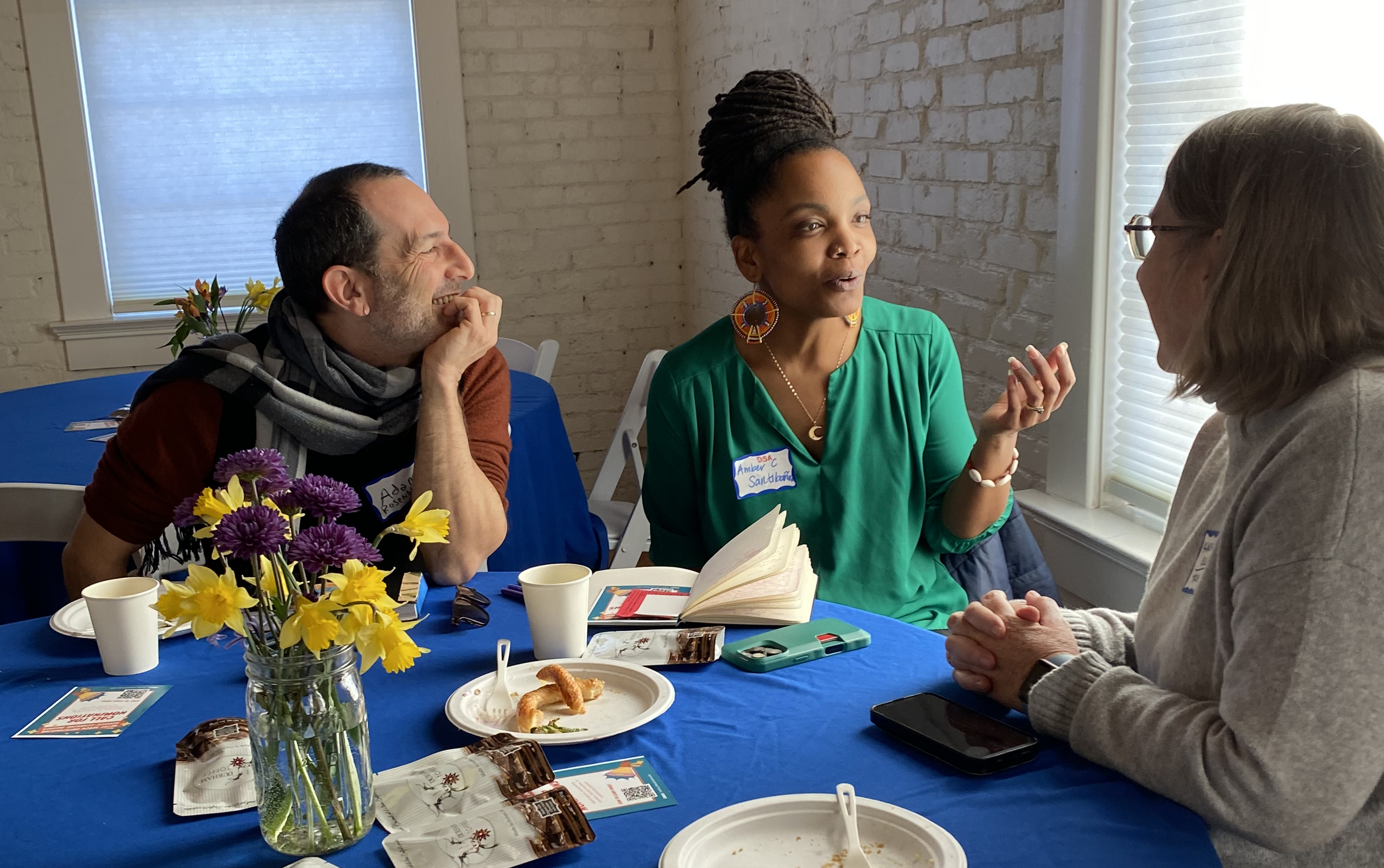
Faculty, staff, and community partners at the annual Community Partner Breakfast

Faculty, staff, and community partners gathered for our annual Community Partner Breakfast to reconnect and celebrate the relationships at the heart of service-learning — a chance to pause, share, and express gratitude for the partnerships that make this work possible.

Our faculty and courses

SLCE faculty see the impact of community-engaged pedagogy — offering opportunities of transformative learning to students, building an intellectual community of practice among colleagues, and moving the needle on issues of concern in the community. A great example of how SLCE faculty share knowledge among each other is when three of our veteran faculty members presented student reflection strategies. Faculty's interest in developing best practices and networking is what makes courses successful.

In FY2025–2026, 2,075 students enrolled in 141 SLCE courses. Across the decade, we have seen course offerings grow across an extraordinary breadth of disciplines. The majority of courses fall within STEM fields (Natural and Social Sciences, N=875) while Humanities courses (N=672) reflect the strong engagement of language departments, Documentary Studies, and others.

1,550
SLCE courses offered across all disciplines, Fall 2016–Spring 2026
357
language course offerings across 11 unique languages
SLCE course offerings by subject area, Fall 2016–Spring 2026
Education
239
Chinese
143
Public Policy
117
Spanish
89
Ethics
77
Psychology
77
Doc. Studies
70
Sociology
45
Hindi
39
What is particularly striking is Duke's language faculty engagement — among 11 unique languages, faculty incorporate community-based pedagogy, a distinction that is rare nationally. The Chinese program's growth has been especially notable over the decade.

Community-Based Language Learning

Duke's Community-Based Language Initiative (CBLI) reflects something genuinely distinctive — the remarkable breadth of languages represented in SLCE here is rare among universities. Among 11 unique languages, faculty share a belief that language study is enriched by community connection, and a commitment to learning from each other about what works. From in-person partnerships with Durham's diverse communities to virtual exchanges and student-created projects, community-engaged language courses are building relationships that tell a powerful story.
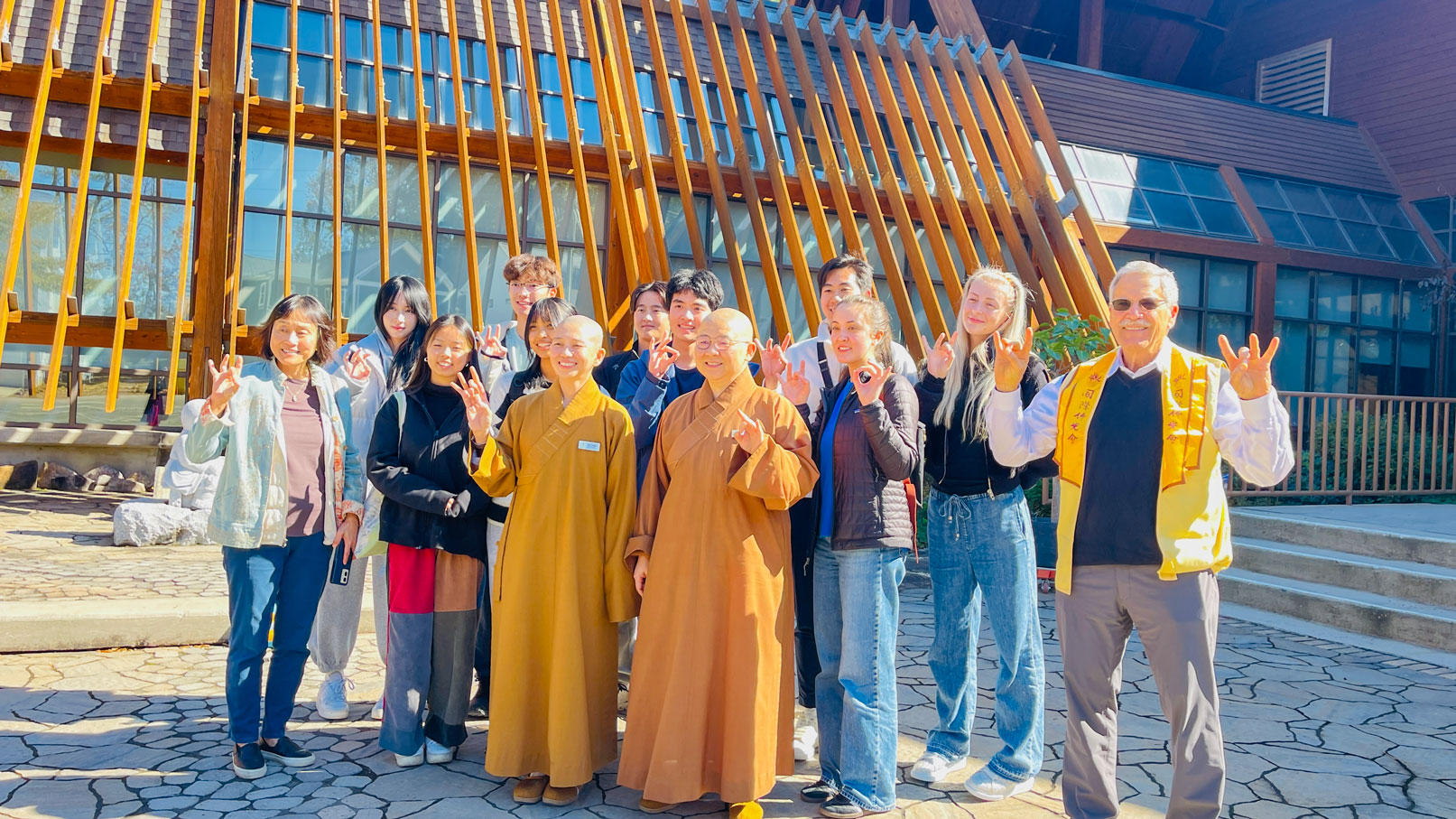
Students in Professor Carolyn Lee's CHN 370 course visit Fo Guang Shan Temple

Students in Professor Carolyn Lee's CHN 370 course visited Fo Guang Shan Temple for a day of community-based learning — practicing meditation, exploring Buddhist calligraphy, studying ritual art, and sharing a vegetarian meal guided by the temple's Venerables. "This gesture symbolizes welcome, compassion, and the purity of a lotus blossom," explains Professor Lee, describing the mudra BLIA members use to greet one another.

Language course history by department

The following tables show courses that received financial or logistical support from our office in at least one semester.

Romance Studies Department

FrenchHaitian CreoleItalianSpanish
101102——
204, 270T203, 204203205, 206, 271T
301, 304, 308, 321, 325——303, 305, 306, 307, 308, 310, 313
———422

Asian & Middle Eastern Studies / Slavic & Eurasian Studies

ArabicChineseHindiJapanesePersianRussianTurkish
99101, 102, 131101, 102—102——
281203, 204, 205, 232, 271T203, 204, 270T——273T—
305, 306305, 306, 331, 333, 370, 382—306——305
407, 408407, 408, 411, 434, 435, 450, 451, 456—————
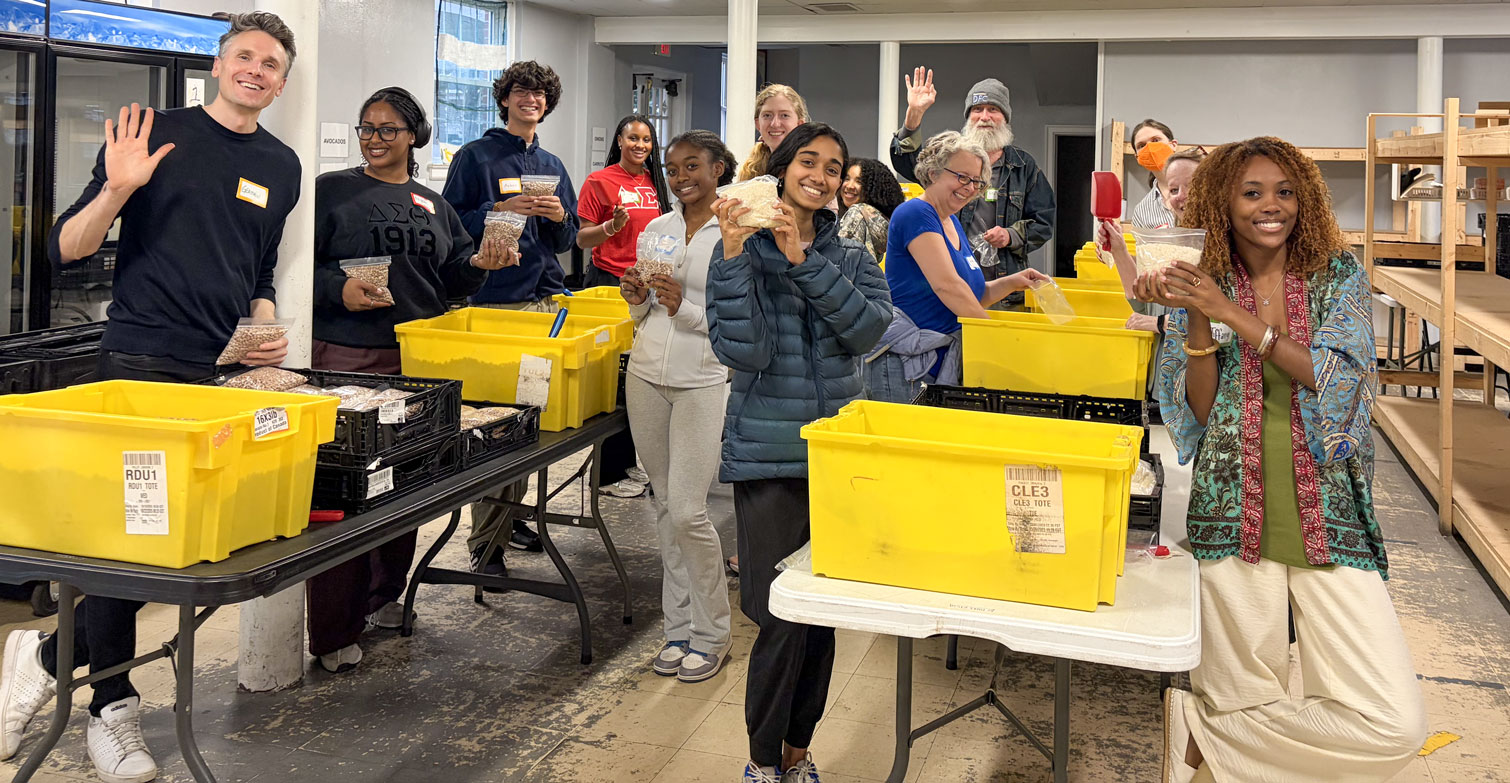
Community Action Day at Emanuel Food Pantry

Faculty, students, staff, and community partners gathered at Emanuel Food Pantry for Community Action Day, packing rice and beans in support of Durham County's largest emergency food assistance program, which serves approximately 860 families each week through a volunteer-powered, no-barriers model rooted in dignity and community care.

Our support of student leadership and equitable access

The Service-Learning Assistantship program has been a constant feature of our work — training 157 community-engagement leaders across ten cohorts. These students have bridged classroom and community — coordinating placements, liaising between faculty and partners, and facilitating reflection activities that deepen students' understanding of community and course content. While the number of SLAs fluctuated due to shifts in Duke's work-study funding models, the program's impact has been consistent.

Service-Learning Assistants by year, 2016–2026
22
16–17
16
17–18
16
18–19
12
19–20
19
20–21
17
21–22
16
22–23
14
23–24
15
24–25
10
25–26
157 SLAs over the decade. 2025–26 dip reflects changes in Duke work-study funding models.

Funded by the Trinity College Dean of Undergraduate Education, we provided 985 free Uber rides in FY2025–2026 alone — removing a significant barrier to off-campus engagement and ensuring equitable access to community learning. We are still searching for more sustainable solutions knowing that the increase in gas prices has consistently increased Uber costs this past year. We are actively working with different units across campus and schools to innovate equitable access to off-campus engagement.

Our community partners

Our faculty and students have partnered with over 300 community entities in the past decade — ranging from nonprofits to governmental agencies to churches to schools. These organizations serve as co-educators, working with our students in many different capacities.

Top partners in FY2025–2026: Lakewood Elementary School (18 courses) and Iglesia Emanuel / Emanuel Learning Center and Food Pantry (17 courses) partnered with an extraordinary number of SLCE courses. Ten additional organizations collaborated with 10–11 courses each, including EK Powe Elementary, Duke Campus Farm, Durham County Main Library, and Club Boulevard Elementary School.

Launched Fall 2025, our Community Partner Spotlight newsletter showcases SLCE models and highlights best practices — helping partners explain their work to wider audiences and inspiring new university-community collaborations.
Duke students in Dream Keepers at Lakewood Elementary

Duke students in Dream Keepers (EDUC 390T) share early coloring book drafts with Lakewood Elementary students — who take on the role of reviewers, critics, and co-creators. In this "reverse Shark Tank," Durham's youngest storytellers help shape how the legacy of Mary Mitchell Harris, Nathaniel White, and the First Five — Black students who integrated Duke's undergraduate program in 1963 — is told and carried forward.
Consistent participation, growing engagement.

Enrollment in SLCE courses has remained strong across the decade, with the rate of participation ranging from 35% to 53% for each graduating class. The Trinity Class of 2025 achieved the highest participation rate on record — 52.7% of graduates had taken at least one SLCE course.

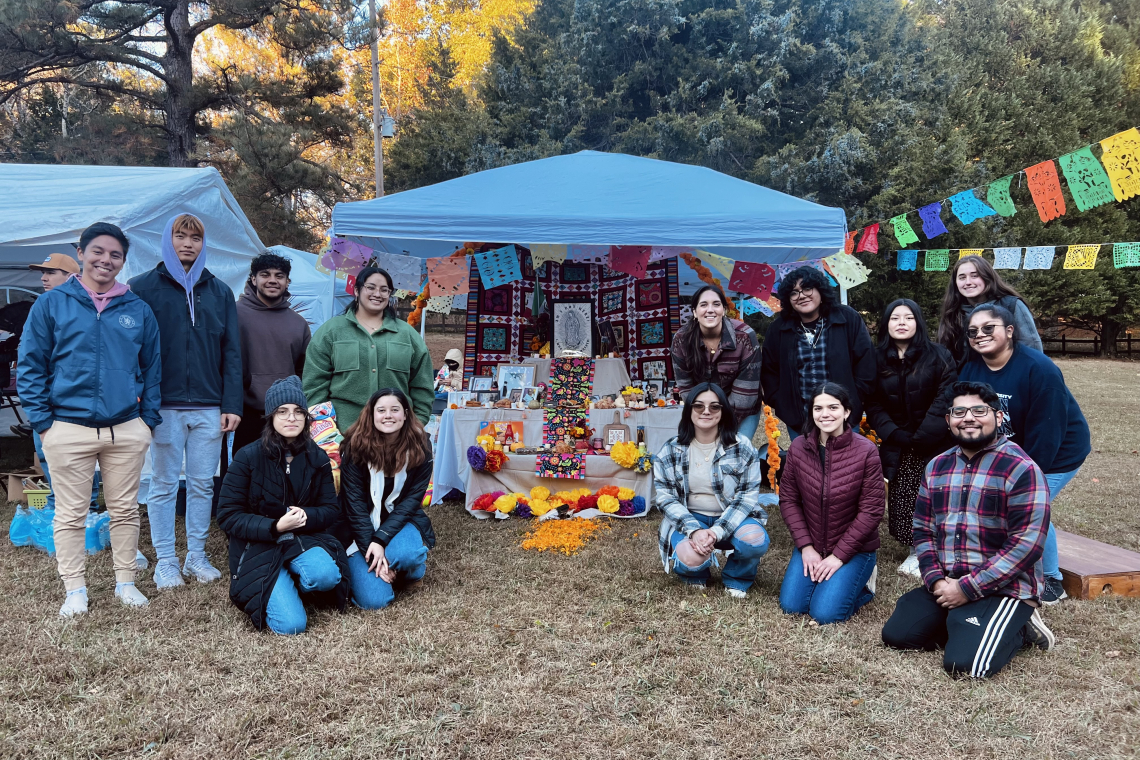
Students in Introduction to Latino/a Studies gather in front of their ofrenda

Students in Introduction to Latino/a Studies in the Global South gather in front of the ofrenda they created for Durham's annual Día de los Muertos celebration — honoring family members and loved ones who have passed away. Through a service-learning partnership with local organizer Yolanda Zavala, students helped pick cempasúchil flowers, volunteered at the event, and built a community altar as part of their coursework.

% of graduating students who took at least 1 SLCE course, Trinity Classes of 2016–2026
35%
40%
45%
50%
55%
60%
30%
35%
2016
43%
2017
42%
2018
35%
2019
38%
2020
35%
2021
40%
2022
39%
2023
46%
2024
52.7%
2025
47%
2026
Trinity Class of 2025 achieved the highest rate of SLCE participation at 52.7%. Source: Duke Registrar / Trinity Academic Affairs.
Enrollment by academic year, Fall 2016–Spring 2026
975
1st year
1,243
2nd year
1,328
3rd year
1,113
4th year
Sophomores and juniors are the most engaged across the decade. Source: Duke Registrar.

Our enrollment numbers have remained steady across the decade — reflecting a deliberate strategy to maintain quality course offerings and attract new affiliate faculty in key disciplines.

About 10% of Trinity students in each graduating cohort take a second SLCE course, and an average of 7.5% enroll in a third or more. Sophomores and juniors are most engaged — a pattern that reflects how students discover SLCE courses through peer networks and advising once they have had time to settle into Duke.

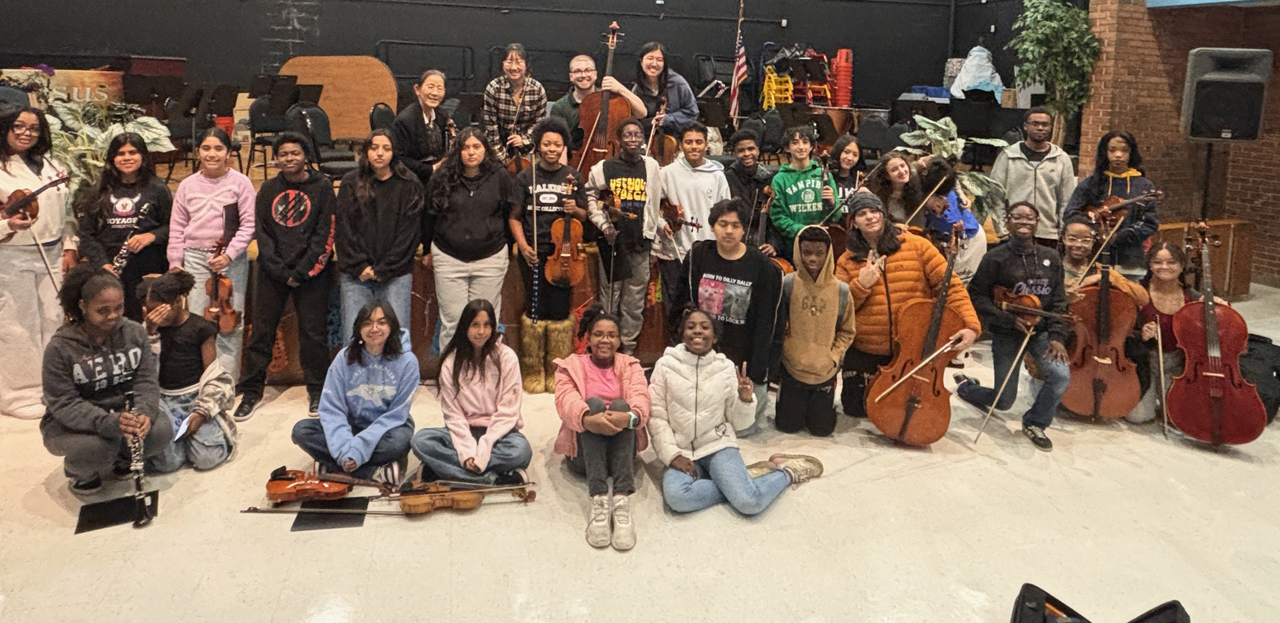
Duke students in Meeting the World Through Chamber Music with Kidznotes

Duke students in Meeting the World Through Chamber Music (MUS 398) — co-taught by Profs. Hsiao-Mei Ku and Caroline Stinson — mentor young musicians through a service-learning partnership with Kidznotes, using music as a powerful model for connection and social change.

Tracking student learning outcomes

From our unique questions in the Trinity Course Evaluations we know that SLCE students consistently rate their SLCE experiences as 4 or better (maximum positive impact 5) in the following areas:

End-of-Semester Course Evaluation responses — all SLCE courses, Fall 2022–Spring 2026
The SLCE component of this course: (scale 1–5)
4.50 4.40 4.20 4.00 3.90 Fall 2022 SP 2023 SP 2024 Fall 2024 SP 2025 Fall 2025 SP 2026 Increased understanding of course material Practical applications of coursework Critical thinking about local & global communities Reflection on diversity, equity, inclusion & belonging
All four learning outcomes have remained consistently above 4.0. Note: Fall 2023 data not included as SLCE questions were not added to the survey that semester. Source: Trinity A&S College Course Evaluations.
Service-Learning Courses
Designed to integrate community-engaged experiences with academic course content, while providing benefit to community partners. Essential elements include 20+ hours of service, critical reflection, and an emphasis on the ethical and civic dimensions of service.
Increased understanding of course material4.24 / 5
Practical application of academic coursework4.24 / 5
Critical thinking about local & global communities4.36 / 5
Reflection on diversity, equity, inclusion & belonging4.49 ↑
Community-Engaged Courses
While these courses do not include the sustained service component of SL courses, they offer enriching community-based experiences, build authentic partnerships, and integrate critical reflection.
Increased understanding of course material4.36 / 5
Practical application of academic coursework4.38 / 5
Critical thinking about local & global communities4.52 ↑
Reflection on diversity, equity, inclusion & belonging4.25 / 5
A new finding worth watching
In Spring 2026, an interesting pattern emerged: SL courses scored higher on the Reflection question (4.49), while CE courses scored higher on critical thinking about communities (4.52). We hypothesize that the extended service commitment of SL courses may lend itself to deeper exploration of systemic social issues, while CE courses — many of which are world language courses — may emphasize relational connections more strongly. These findings are new and we will continue to explore them to improve our consultations with faculty.

All scores from Spring 2026. SLCE-targeted questions have been included on the Trinity College End-of-Semester Course Evaluations since 2022 (except Fall 2023). Source: Trinity A&S College Course Evaluations.

The research speaks for itself.

Drawing on the AAC&U VALUE Scoring Collaborative framework, our team designed a direct-method research study examining how participation in SLCE courses shapes how undergraduates think about civic identity, community engagement, and ethical responsibility.

From Spring 2024 to Spring 2025, we piloted, refined, and implemented the study. Participants wrote a 350-word response to a prompt, rated by four readers using rubrics assessing Civic Identity and Commitment (CIC) and Ethical Issue Recognition (EIR). The following summarizes findings from 165 respondents across 15 SLCE courses.

Students scored higher in Civic Identity and Commitment than in Ethical Issue Recognition — with the highest frequency of CIC scores in the 3–3.9 range (out of 4). We believe the prompt encouraged responses focused more on the self and engagement with community than on exploration of broader social issues, which may account for the CIC/EIR distribution. Our initial analysis shows the same distribution patterns occurring regardless of graduation cohort.

Two key findings

Students see community engagement as relational rather than transactional — shaped by listening, collaboration, and accountability to others.

The learning is complex — the integration of theory and practice is shaping career pathways and how students understand their place in community.

Emerging themes from student responses

126 responses
Learning & curiosity
Misconceptions about local community fueled deeper motivation to engage. Students discovered that SLCE learning is complex — shaped by human experience alongside academic knowledge.
106 responses
Giving back & helping
Students reflected on the responsibilities created by a Duke education. Many challenged their own savior complex, recognizing communities as resilient and deserving to be listened to.
79 responses
Identity & culture
Service is not one-sided. Students explored global and local contexts and shifted from viewing service as an action to understanding it as a lifelong commitment and identity.
57 responses
Connection & relationship
Students emphasized genuine relationships built on trust, mutual respect, and shared experience. Engagement is understood as relational, not transactional.
32 responses
The Duke bubble
Students identified inequities in Durham and expressed a desire for structured exploration beyond campus. For some seniors, this was their first experience off-campus.
22 responses
Privilege
Recognition of inequities and a desire to reflect. Students explored their own responsibility to support equitable outcomes and grappled with tensions around belonging.

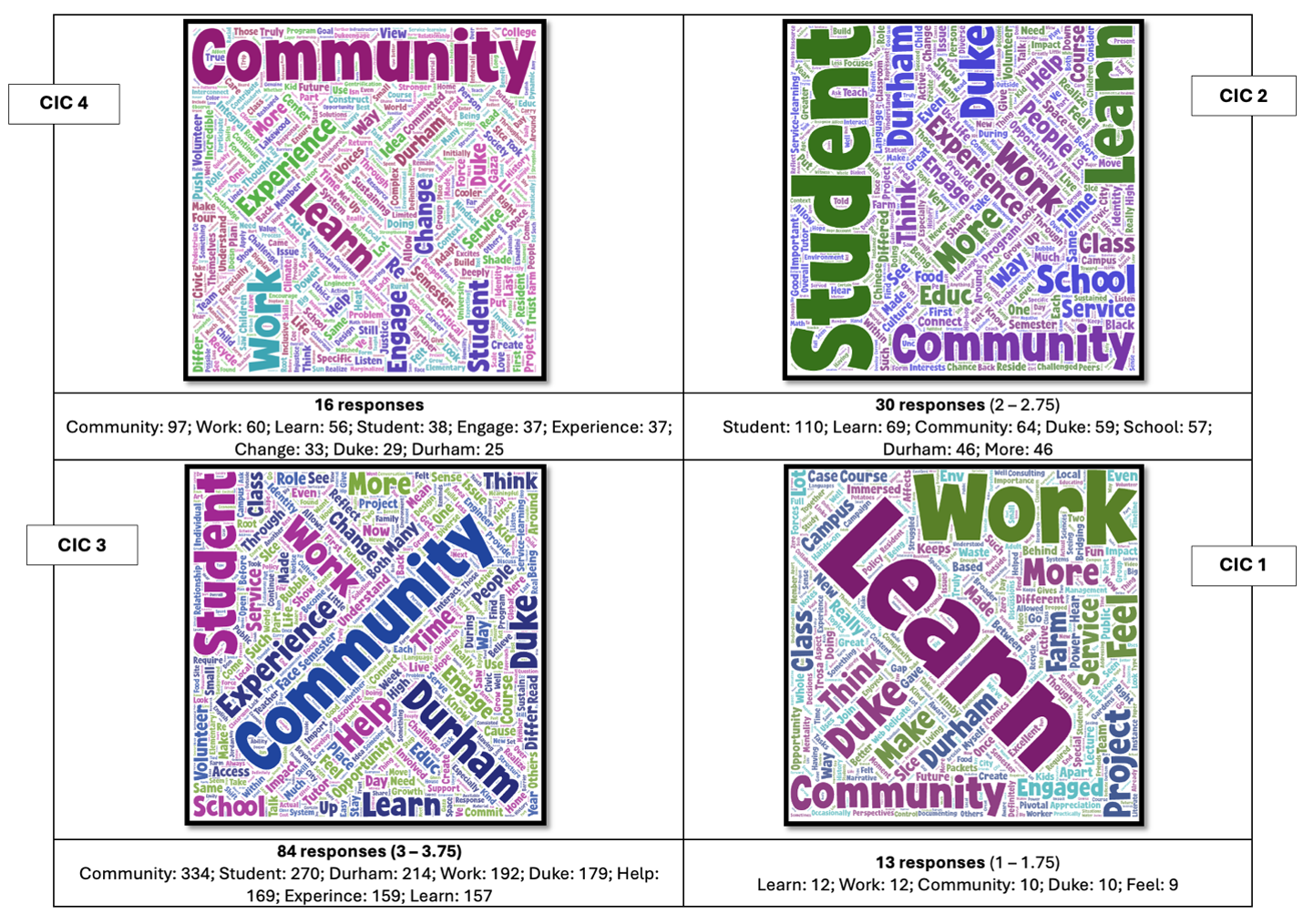
Word cloud analysis

The following word clouds visualize the frequency of words used by students whose responses scored in each range of the CIC rubric (1–4). Higher-scoring responses show a greater diversity of external, community-oriented language, while lower-scoring responses tend to reflect a more internal, course-focused perspective.

CIC word clouds showing student response language across score ranges 1-4

Civic Identity & Commitment (CIC) word clouds by score range. CIC 1 (13 responses): internal, course-focused language. CIC 4 (16 responses): community-oriented, outward-facing language. The shift from "Learn/Work/Class" to "Community/Durham/Engage" reflects growing civic awareness.

A three-year plan rooted in what we know works.

In FY2024–2025, our team developed a three-year strategic plan implemented in Fall 2025. Our goals span faculty support, student transformation, community reciprocity, and leadership in the broader SLCE field. We are also actively exploring how the Constellations program's required community-engaged component for first-year students may create a new pipeline to SLCE coursework in the years ahead.

Goal 1
Faculty support
  • Build learning communities that deepen interest in SLCE pedagogy
  • Provide support and resources that strengthen faculty ability to offer high-quality SLCE courses
Goal 2
Student learning & transformation
  • Offer intentional, transformative learning experiences through community engagement and reflection
  • Create opportunities for student leadership and sustained service, connected to the We the People civic lens
Goal 3
Reciprocity with community
  • Partner with community organizations to address systemic inequities through sustained, asset-acknowledging relationships
  • Value co-creation of course content and scholarship; incorporate mutually beneficial practices
Goal 4
Within Duke & the SLCE field
  • Identify opportunities to raise awareness of SLCE pedagogy within Duke
  • Participate in the national field by sharing Duke SLCE practice and disseminating current scholarship

Our Duke community engagement network

We are grateful to collaborate regularly with colleagues across Duke's schools, centers, and programs.

Bass Connections
Edward Balleisen, Sr. VP; Meghan O'Neil, Director
Constellations
Michael Domeracki, Director
Duke Center for Community-Engaged Scholarship
Debbie Goldstein, Assoc VP; Carrissa Dixon, Senior Director; Camry Wilborn Mercer, Asst. Director; Mina Silberberg, Faculty Director
Duke Community Affairs
Stelfanie Williams, VP; Tuere Bowles, Assoc VP; Domoniqúe Redmond, Senior Director for Education
Hart Leadership Program
Andrew Nurkin, Director; Lucy Ballard, Sr. Program Coordinator; Lee Edelbut, Sr. Program Coordinator · Sanford School
Kenan Institute for Ethics / DukeEngage
Christine Folch, Faculty Director; Inge Peterson, Director of Operations; Kristin Wright, Assistant Director
Pratt School of Engineering
Adrienne Stiff-Roberts, Assoc Dean; Alisha Brice, Director
Program in Education
Kristen Stephens, Chair; Jan Riggsbee, Teach House Director; Partners for Success, Joanna Middleton
Nicholas School of the Environment
Liz DeMattia, Duke Marine Lab; Caitlin Reilly, CE Fellow
Office of Undergraduate Education
Amanda Kelso, Assoc VP; Hayley Broadhead, Program Manager
Duke Student Affairs
Elinor Landess, Asst. Dean; Off Campus & Community Life
NC LiteracyCorps
Maranatha Wall, Program Coordinator

Full network list includes additional partners in School of Nursing, School of Medicine, FOCUS, Nasher Museum, SE Regional Coalition for University-Assisted Community Schools, and more.

We are grateful to Trinity College of Arts & Sciences for their ongoing support, which makes our community-engaged teaching and learning possible.